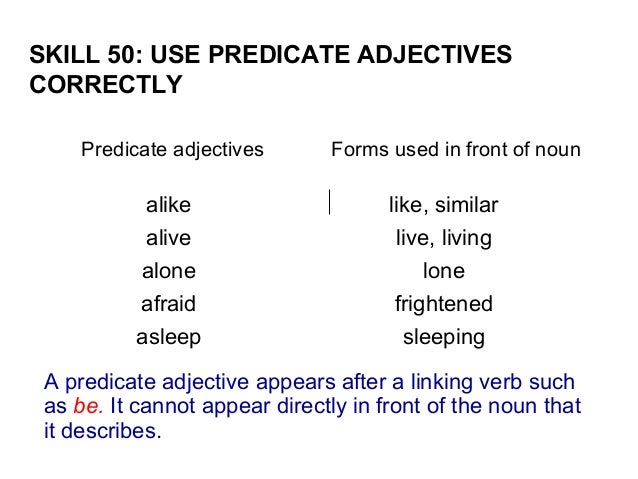
Predicate adjectives Forms used in front of noun alike like, similar alive live, living, alone, lone, afraid, frightened asleep sleeping A predicate adjective appears after a linking verb such as be. It cannot appear directly in front of the noun that it describes.
SKILL 10: LISTEN FOR NEGATIVE WITH COMPARATIVES COMPARATIVES WITH NEGATIVES Comparative more Example no one is more beautiful than she is Meaning She is the most beautiful Comparative er Example He couldn't be happier. Meaning He is extremely happy To get more information watch the next video: https://www.youtube.com/watch?v=TlcwgF-lFBA
SKILL 17: LISTEN FOR IDIOMS Idioms are special expressions in a language that all speakers of the language know these special expressions describe one situation in life but are applied to many different areas of life. Idiom question can be dificult for student because they seem to be describing one situation when they are really describing a different situation. To get more information watch the next video: https://www.youtube.com/watch?v=WVHlVbIgUH0
SKILL 11: LISTEN FOR EXPRESSIONS OF AGREEMENT Expressions of agreement Agreement with positive statements so I do me, too. I´ll say! Isn´t it! you can say that again! Agreement with negative statements Neither do I. I don´t either To get more information watch the next video: https://www.youtube.com/watch?v=hjkKKiC_38w


Comentarios
Publicar un comentario